
NEWS: Two Years of Togetherness: a quick summary of our online celebration which fostered clarity, courage, camaraderie and hope.
In mid February, we brought together a host of partners - past, present and future - who have a shared interest in loneliness, social cohesion and systems change to share our learnings and experiences from two years of the Steps to Togetherness movement. There was a strong spirit of camaraderie. There was also huge encouragement around what will be possible if - or should we say when - we secure further funding to continue, deepen and scale the movement.
The great turn out (over 100 people!) and appetite for more Togetherness work across the UK is further testament to what our evaluation concluded: that now, more than ever, we need community, bridge building, togetherness, social solidarity and hope.
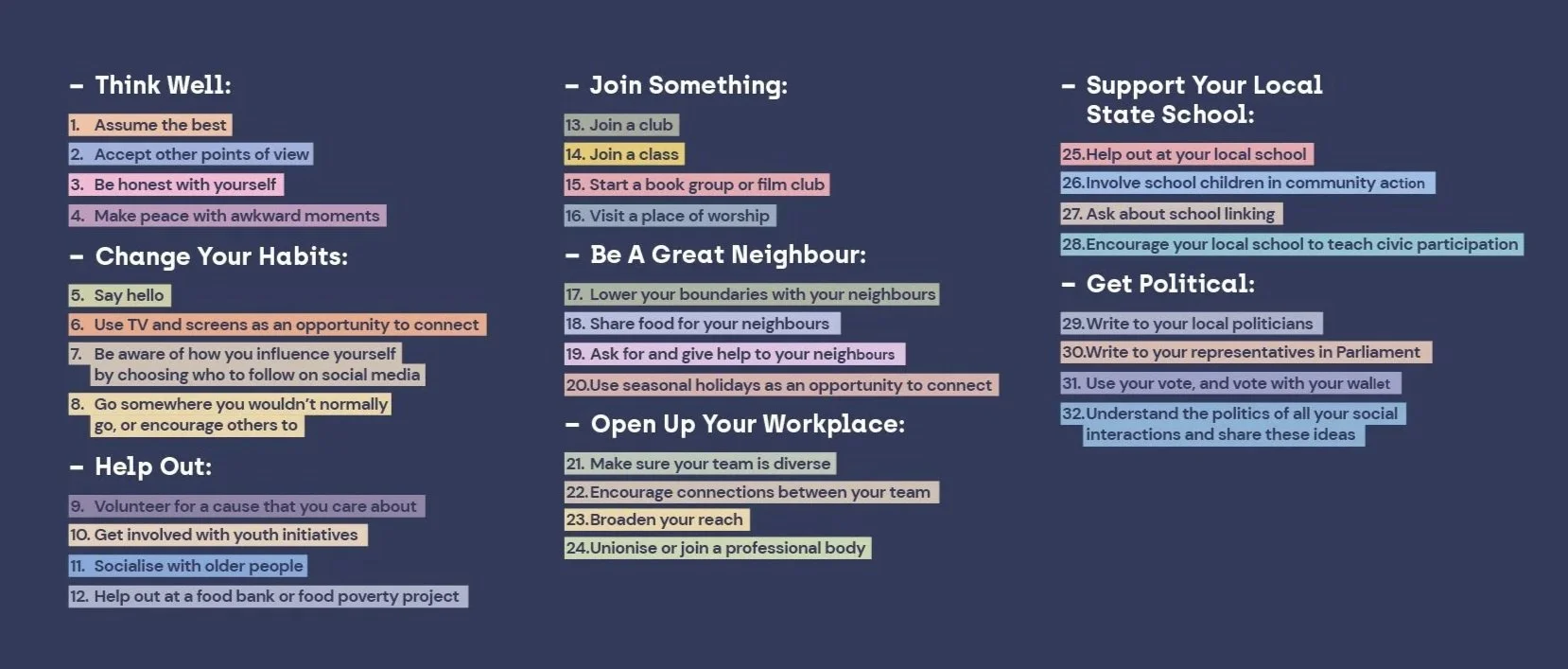
Our team has spent two years learning how to build connections within and between different communities in areas ranging from Lewisham to Lincolnshire to Stoke-on-Trent through Steps to Togetherness - a national grassroots-led civil society movement, centred around a systems change framework and a practical resource for 32 small actions we can all take to build more connection within and between communities in our lives. With two years of know-how in tow, and a ‘community of community leaders’ mobilised, the Togetherness movement is now ready to be scaled. The Togetherness movement has the potential to shape the future for the better and create a positive public social imagination of a country brimming with hope and optimism.
One of our treasured panellists, Aba - former manager of the DCMS-funded Tackling Loneliness Hub - summarised what’s possible for the future of Steps to Togetherness: “There are lots of exciting directions that Steps to Togetherness could go in, but what sticks out is that it can be woven into other sectors as part of a behavioural framework. It could be embedded into retail or cultural institutions, local authorities, even corporate environments… Behaviour spreads a lot faster than a strategy or document and lasts a lot longer.” Wow, we couldn’t have said it better ourselves. Indeed, one of our key plans for the future is to expand our definition of community leader to broaden the movement beyond the civil society sector. Grassroots organisations will always be at the heart of the movement, but libraries, hairdressers, schools, and even corporate workplaces can be supported and leveraged as ‘community leaders’ through which greater connection within and between communities can be built.
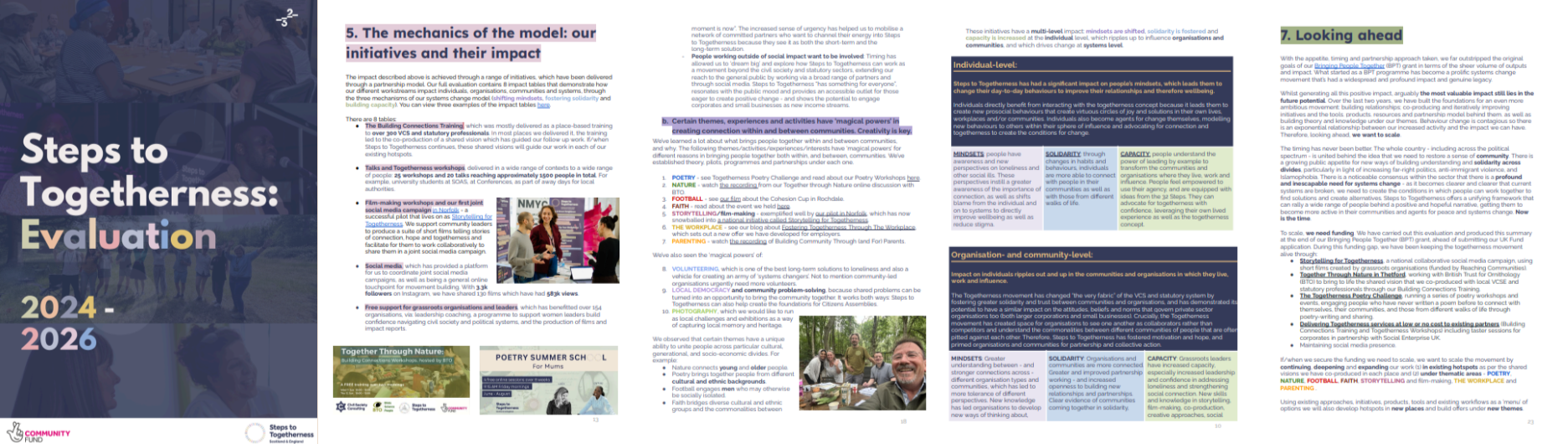
You can read our evaluation to get a sense of the impact, the foundations we’ve built and our future plans - or keep reading to get a flavour for what came through at the event.
A quick rundown of the event
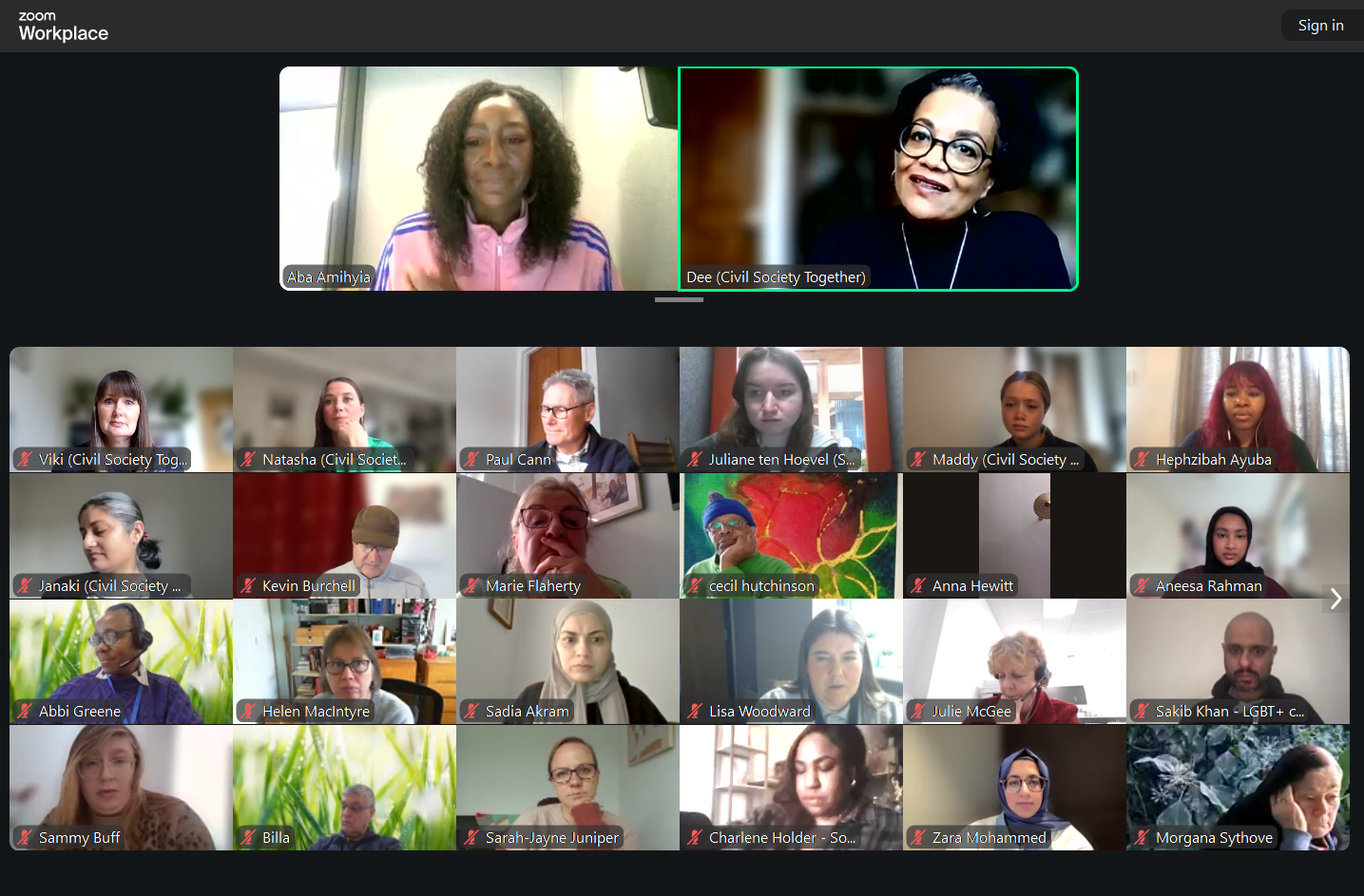
The online event was structured as a podcast-style conversation followed by an open-floor discussion.
During the ‘podcast’, you heard the story of the Togetherness movement told through the voices of some of our esteemed and treasured partners - and how Steps to Togetherness turned from a programme into a movement. It was all beautifully, facilitated by the fantastic Dee Brecker, who coaches us as an organisation as well as the grassroots organisations we support through Nurturing Grassroots.
First up, Natasha Ereira-Guyer explained the conceptual framework behind the movement, concluding with “When it comes to restoring community and fostering a culture of tolerance and peace, we believe that human instinct is on our side a lot more than we are led to believe. Hope, storytelling and shared experiences unlocks those instincts.” In the words of Dee: “Coming together is a bit irresistible”.
We heard from partners in Norfolk:
Hepsi shared her own personal experience with Steps to Togetherness as a young person. The conceptual framework inspired her to lift the stigma around loneliness and, lead by example, through her instagram channel for young people showing them how she has followed some of the 32 Steps to Togetherness in Norwich.
Samantha is a community development worker at Norfolk County Council. She explained how, following Film-Making for Togetherness, she has been spotlighting community heroes that could otherwise go unnoticed.
We heard from Hackney Council’s CEO, Dawn Carter-McDonald, about the impact that the earlier Togetherness Conference in Hackney had had on the council - as well on her personally. Dawn spoke on how the concept of Steps to Togetherness is now embedded in local authority policy. She highlighted the importance of Togetherness work everywhere (not just, say, places affected by the violent riots two summers ago) because all local communities are affected by national and international events and media narratives.
After the podcast, we went into an open floor discussion:
Paul Cann, the founder of The Campaign to End Loneliness, shared where he believes Steps to Togetherness fits in in relationship to The Campaign - “the biggest mountain for us still to climb is how we operate as a society”. Paul regards the behavioural and cultural ‘revolution’ that we envisage with Steps to Togetherness as the ‘unofficial’ fourth and final phase of the Campaign. He quoted the late civil rights activist, Rev Jesse Jackson: “Keep Hope Alive”.
It was powerful to have Zara Mohammed give her perspective on Steps to Togetherness as the former Secretary General of the Muslim Council for Britain and one of Civil Society Together’s new Advisory Directors. The Women for Togetherness leadership development programme, delivered by Zara, was a beautiful and brilliant part of Steps to Togetherness. As Zara explains beautifully in this short clip from our recent event, there are many empowered individuals, already stepping up in their communities. They do great work with or without our support. Bringing them together to create a supportive ecosystem is key for catalysing that work: they need a community for their own wellbeing. In Zara’s words: “those of us who have that bug that means we just can’t stop helping in our communities… let’s make sure we are taking care of ourselves in the process”.
Andy Green from Modern Cockney Festival was so inspired that he proposed we organise quarterly meetings like this one - with partners across the UK to ensure learning, exchange project experiences and further create a collegiate mutual aid network to ensure all togetherness initiatives are shared to boost morale and positive social imagination (NB the Modern Cockney Festival is running throughout March, find out more here)
So what did we conclude?
Together with a diverse range of partners across the UK, we have now built the firm foundations for a constructive Togetherness movement that will inspire connection and hope in our communities.. The movement synergises with the energies and commitments of the broadest possible coalition of social action and faith-inspired civil society organisations, their leaders and the communities in which they are truly grounded and devoted to serve.
And what do we want you to do about it?
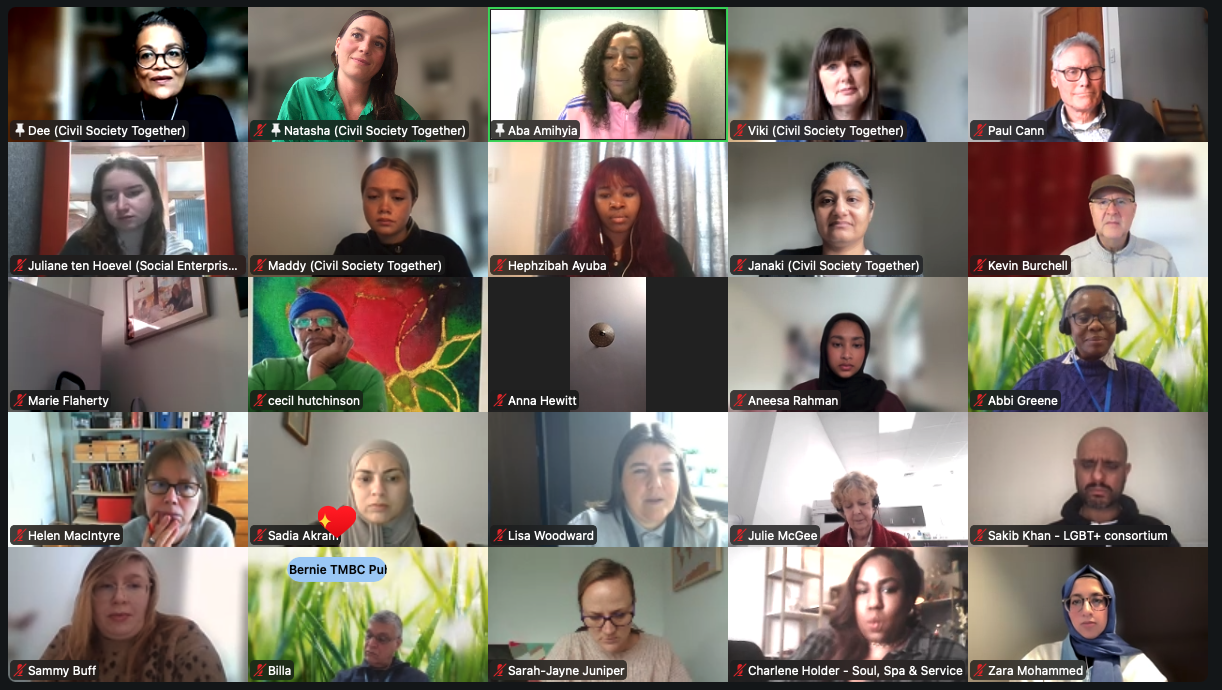
If you didn’t attend the celebration and want a dose of togetherness and hope!, you can watch an edited-down version of the event recording here
Have a read of our evaluation that documents the first two years of Steps to Togetherness, the impact it has had and demonstrates how we can scale the movement.
Keep in touch with us and watch this space, by joining our mailing list and/or following us on LinkedIn.
