
NEWS: Rebuilding the village: Our Founder’s PhD research into how we can build community for (and through) parents
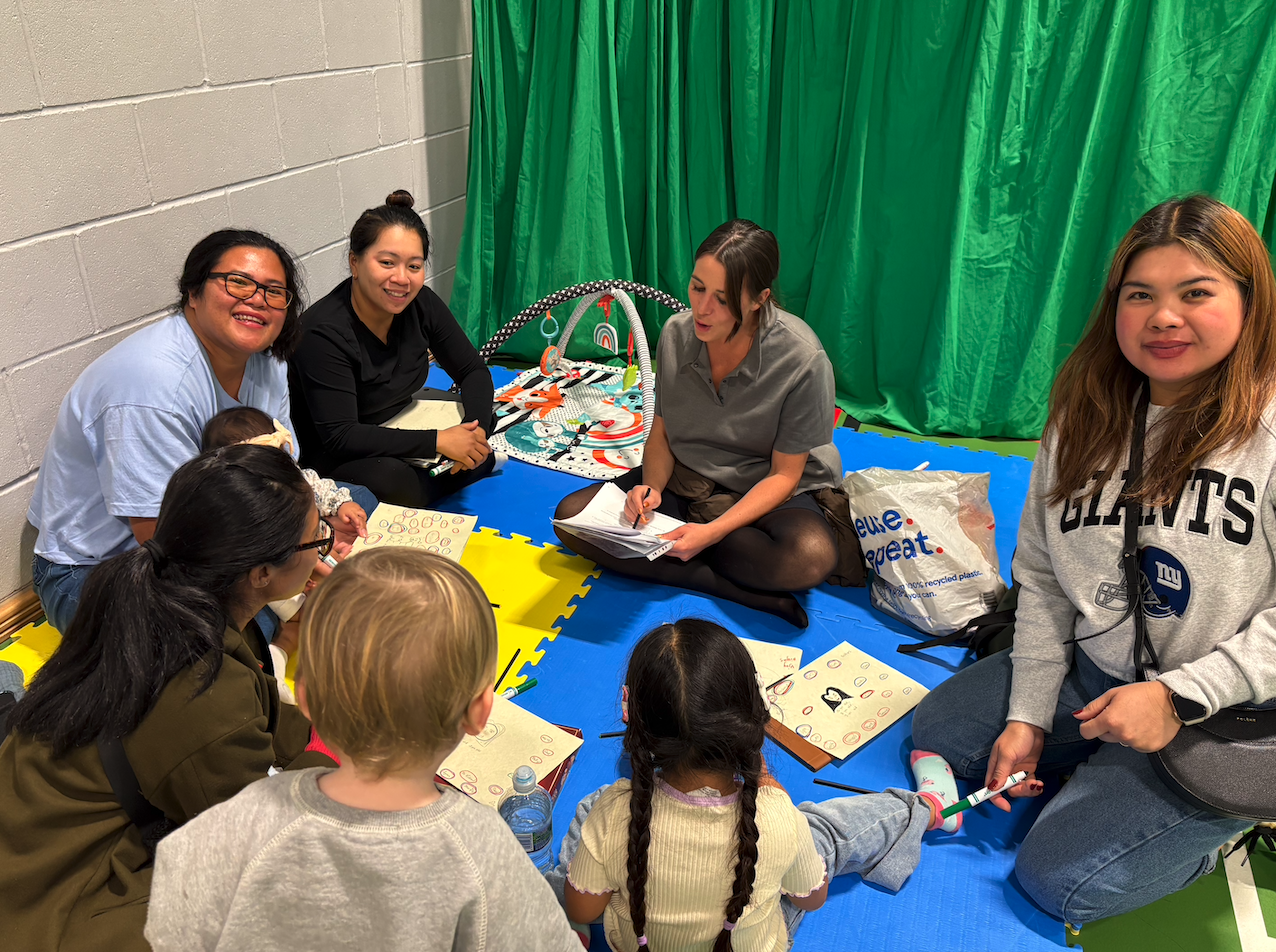
Civil Society Together is delighted to share that our Founder Director, Natasha Ereira-Guyer, has begun a part-time PhD at the University of Cambridge, exploring modern motherhood/parenthood and how it can be improved. Her research as an Evolutionary Psychiatrist sits at the intersection of anthropology, community development, and public health — and is deeply connected to our Steps to Togetherness mission, which is all about rebuilding community in our individualistic and lonely society. Her research methods are designed first and foremost to have a positive impact on mums/parents in the here and now, whilst at the same time gathering rich qualitative and quantitative data that can improve policy for the mums/parents of the future.
Our Togetherness work is based on a simple but powerful idea: the loss of community (and the ensuing loneliness) lies at the root of many of today’s challenges. Especially the worsening health inequalities and growing social polarisation, which in turn inhibits positive systems change.
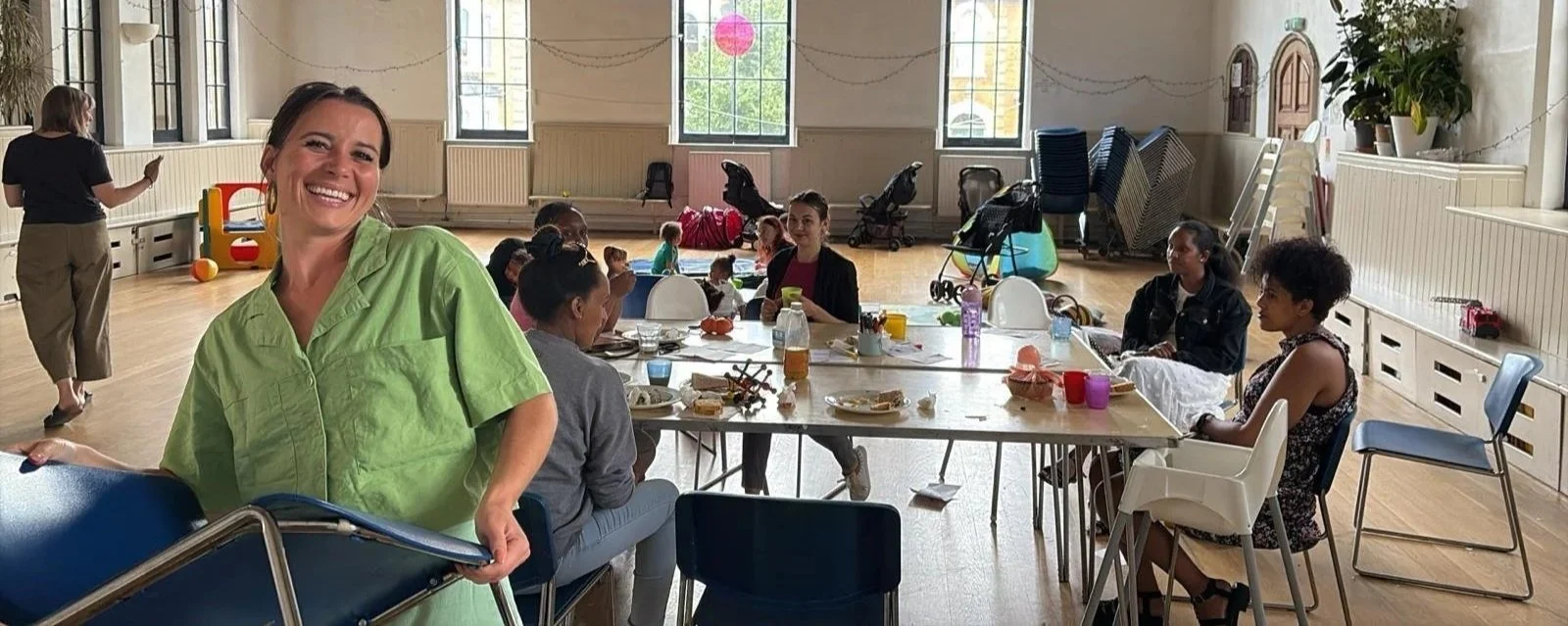
One of the stages of life in which we miss community the most is during early motherhood/parenthood, which is because bringing up a child is no small feat - human beings simply were not designed to bring up children without a community around them. It ‘takes a village to raise a child. Natasha’s research builds on this idea, asking what does a ‘good’ village look like in a society where we have lost our culture of community? Natasha believes that not only do parents need community, they’re also a natural entry point for rebuilding communities, now and for the next generation.
Why the world needs this research
Humans are a profoundly social species. For most of our evolutionary history we lived in small scale societies and raised children within extended networks of family and community. Living like this is what allowed us to become human beings: we could have never become the brainy creatures capable of huge civilisations we are today without working together as community. That’s why it really does “take a village to raise a child.”
In modern UK, parents are generally expected to raise children within small nuclear families or even entirely alone as single parents. This is simply not the environment human beings evolved to thrive in - it’s not how our brains or bodies are wired or designed. Therefore, we see high levels of loneliness and perinatal mental health challenges in countries like the UK. To make matters worse, our cultural ideology leads us to believe that mothers/parents can (or should be able to) raise children without a village. Therefore, mothers/parents often experience guilt, shame and self-blame. Natasha describes this as an “added layer of cruelty”. She explains: “Not only are we allowing mothers/parents to bring up their children without the village they are biologically and psychologically designed to need, we are also allowing them to believe there is something wrong with them when they struggle.”
The negative impact of our child-rearing cultures and beliefs is not felt equally. Those with financial resources can “buy in” the support of a proverbial village — childcare, therapy, mother and baby yoga. However, for mothers and parents without resources, the presence or absence of a community of support can make all the difference.
Natasha’s research aims to find out the universal ‘ingredients’ of a good village, with an ambition to empower mothers and parents across the board to gather their villages, and to advocate for policies and funding decisions that will support them to do so.
The question we need answering
It’s clear that, as a society, we need to support and enable mothers and parents to gather their villages.
The first step could be to give mothers the evolutionary explanation behind the expression ‘it takes a village to raise a child’. There is some fantastic research being carried out (by Natasha’s supervisor, Prof Nikhil Chaudhary, and the Royal College of Psychiatrists) to explore how the evolutionary explanation given above helps mothers/parents to lift away feelings of guilt, shame and self-blame and encourage them to ask for more help from the ‘villagers’ around them.
However, before we can start going around and telling mothers/parents that they need to gather their villages, we first need to know what a good village looks like. In a country where we have lost the ancestral village, who’s to say what a good village looks like? Or should look like? Natasha’s research asks this vital question: what does a “good village” look like for parents today?

There are many ways a ‘good’ village can look, because there are many sources and ways that mothers/parents can get the social connection and support they need. However, all ‘good’ villages are sure share some of the same universal features. Natasha calls on the analogy of five-a-day: “we know we all need our five-a-day, but there are no set rules on exactly what combination of fruit and veg we should eat. As long as we’re getting our Vitamin C and B12, we all have the freedom to eat the fruit and veg we like, which grows locally to us, which is affordable to us, etc”
Over the next four years, Natasha will be trying to find out the ‘active ingredients’ of a ‘good’ village. Broadly, she will:
Map the social support networks of a diverse range of mothers/parents across the UK, from a wide range of communities and backgrounds. By delivering creative and therapeutic workshops via a network of charities, grassroots organisations, children’s centres, schools and professional networks.
Compare the villages with one another to identify what ‘happy mums’ living in different contexts have in common - as well as with mothers in hunter-gatherer communities in northern Congo, who live lifestyles much closer to those of our past. Through this comparative analysis, Natasha hopes to identify the the ‘Vitamin C’ and ‘B12 of a good village.
Develop a practical toolkit for charities and grassroots community-led initiatives, based on the active ingredients uncovered: Natasha is expecting to find that, for those without a village, charities and grassroots organisations are filling the gaps. The toolkit will guide and strengthen their work, and also validate much of the work they are already doing to make a stronger case for long-term investment.
How the research is being carried out
Perhaps the most commendable part of Natasha’s research is her methodological approach. Natasha is passionate that academic research can have a positive impact while it’s being carried out: “impact doesn’t need to be an add-on or afterthought at the end of a long and extractive research process, it can AND SHOULD be build into the process.” The world may change a lot by the time the research finishes, so it’s our ethical duty to make sure the research has a positive impact in the here and now, not just offering a pot of gold at the end of a rainbow. Therefore, her data will be gathered through a series of creative and therapeutic group sessions delivered mothers, parents, and carers, co-hosted by trusted individuals from charities, grassroots organisations, children’s centres, schools and professional networks.
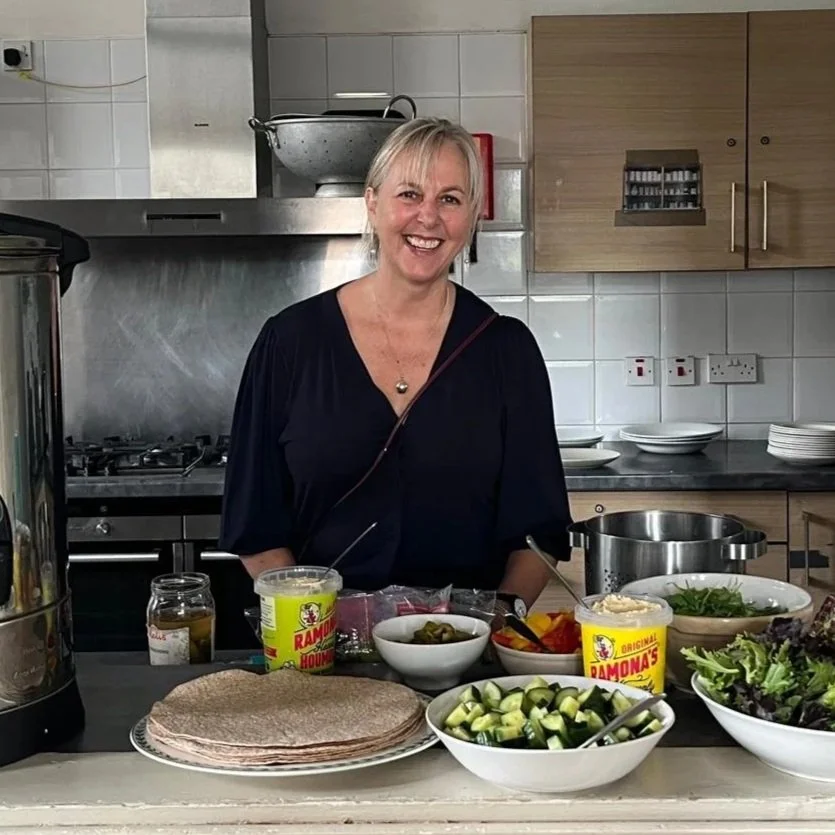
Gabrielle Ereira-Guyer, supporting psychotherapist
Natasha has developed an It Takes a Village workshop that is designed to be enriching, whilst at the same time generating valuable data and insights for the research. The mothers/parents find the sessions to be “validating”, “eye-opening”, “thought-provoking”, “profoundly reassuring”. Others have said:“Suddenly everything makes so much sense, I don’t think I will be doubting myself in the way I have been”and “I want to tell the whole world about this!”
The sessions are designed to to offer quick-wins for participants, as well as prompting longer-term behaviour changes and relationship improvements:
In the first half of the workshop, parents learn about the evolutionary science that demonstrates why no one is ‘designed’ to raise children alone. There is a therapeutic listening circle and participants are typically very eager to share their experiences.
In the second half, parents do a gentle creative exercise to “map” their own village, before moving into a reflective conversation about what they’ve learnt and noticed.
In the weeks after the workshops, mothers/parents have a one-to-one session to reflect further and in private. Natasha is being supported by a psychotherapist, Gabrielle, who, funnily enough, is also Natasha’s very own mother!
The intention is for mums and parents that participate in a workshop come away with:
Less guilt, shame and self-blame: there is a huge sense of relief when mothers and parents realise that, actually, it’s perfectly natural to struggle when bringing up a child in today’s world without a community of support.
New ideas for how build and strengthen their support networks (and a readiness to ask for help and support).
Stronger, deeper bonds, and a shared understanding, with others in the room.
Based on the 70 mothers that have so far participated:
100% experience a feeling of relief, validation and/or alleviation of feelings of shame after participating in the first half of the workshop.
80% feel inspired and able to make changes to their lives, relationships and/or have conversations they might not have otherwise had.
At the bottom of this article, there are some longer testimonials too. With proper funding in future, Natasha hopes to be able to gather more impact data without running the risk of over-surveying participants.
The sessions are also designed to strengthen the organisations co-hosting the sessions, by strengthening the relationships and sense of community among the parents. The workshops also generate valuable impact data — helping to evidence and communicate the difference they make.
Want to be involved?
Natasha’s research brings together a range of research partners who are co-hosting ‘it takes a village’ workshops. So far, this has included: Kitchen Club, Babyzone in Croydon, Dagenham and Hammersmith, Maternal Journal, Kids Matter, the Mums and Tots group at Norwich Mosque, YMCA North Staffs and Bumps, Birth and Belonging:
Become a research partner: Are you an organisation working with mothers and parents? You are invited to work with Natasha to host a workshop, which will directly benefit mothers and parents, whilst gathering valuable impact data for you.
This PhD is not just an academic project; it is part of a wider movement to re-build community through and for parents.
Contribute funding: Natasha’s research needs funding. Are you an organisation working to support mothers, parents or children? Or reduce loneliness in general? In the coming months, Natasha will be starting a crowd-funder to invite organisations with a stake in the research findings to donate anything from £100 to £5,000.
All partners will be regarded as co-owners of the practical toolkit and have an opportunity to contribute to and shape it.
Organisations and supporters who would like to partner, fund, or follow the research are warmly encouraged to get in touch: natasha@civilsocietyconsulting.co.uk
Testimonials from the mothers
“Hi, since our last conversation [four months ago], I feel that I have taken some pretty big steps to make it better for me. I have left my job and am joining another place where the timings work better for my husband and I. I have been more forthcoming to ask family members for help when I am on my last reserve of energy.
I am more positive to accept that it is OK that I am finding it hard to juggle three children with other commitments and will make it clear [to friends and family] if I can or can't do something. I am prioritising what needs to be done rather than trying to do everything in my to do list. I am at a point where I am planning in time for myself where I couldn't which is making me feel more better.”
“I am of a mixed heritage background, African and English. Being in Natasha's research workshop really resonated with me. This was because, I was fortunate enough to have spent some of my foundation years with the African side, where 'it takes a village to raise a child' is the essence of family life.
The research workshop made me think about what a different experience my son was having in London - because I have no everyday support. With his father working away a lot and my mum and small family living in Birmingham, I was in London on my own doing everything for my son. It made me think about and appreciate my happy childhood with my grandmother, aunts, uncles and cousins.
In view of this, I have been making more of an effort to go to Birmingham where my son can spend time with family members.
At the research workshop, it was interesting to meet other mums some of whom I am still in contact with and hear about their experiences and family structures. When doing the mapping activity, it really makes you think about who you have in your life and what kind of support you get from them. For me and for reasons mentioned above it was a bit of an awakening to realise that my son wouldn't have the experience I had. I mentioned Natasha's research to other mums from my antenatal group and they expressed an interest in taking part.
I think it is an important piece of research and should be encouraged in this day and age where children are exposed to screens as a form of babysitting apparatus instead of having more playful interactions with family.”
“Natasha, I applaud you on your choice of topic. It is something that needs to be addressed. The sessions with you confirmed to me how much of a village I was lacking. It made me think about my childhood and all the people I had in my life who helped create a happy and loving environment. Keep up the good work and all the very best!”
“I feel so much more sure of myself after our conversation and I absolutely loved connecting with you and other mums on a deeper level. Thank you for helping me understand why I am finding motherhood so difficult and giving me a way to articulate what I need from the people around me and why. I actually feel quite excited about life again.”
“Yes the workshop changed how I feel - I hadn't had the awareness to realise how little support I asked for, in multiple different ways. I knew I had no hands on childcare support from family, which I felt both sad and a little resentful about to be honest. But I hadn't realised how little I ask for from others, in other ways. I know I have learnt to be super independent, but seeing it laid out like that with my support network was illuminating. I also showed me that the only person I allow myself to rely on is my partner, which is actually really beautiful to see, but also probably not ideal in him being just one person.
It has changed the way I see the support that primary caregivers need. It is so much more than just time taking the kids - it is practical, emotional, mental, physical, financial etc. There is such an absence and it is both about what is offered and what is asked for. To me, things being offered is also important: it is how I feel seen, cared for, loved.
I spoke to a few of my friends about it after as well as my partner. Friends with and without kids themselves. I tend to share my understanding of myself with others close to me, so it naturally came up as we talked. One friend, a mum, has more the traditionally male role of the bread winner while her partner doesn't work and looks after the kids - when we spoke about it, she shared how hard it is for her, in her slightly different role. There's a lot to it for both/all parents, whether primary or secondary, working or stay at home.
This last point is the hardest one because I have the awareness but have struggled to take the action. My grown sense of independence and reluctance to rely on others is so deeply inbuilt and hard to change. I also had a situation with a step parent that compounded my sense that I cannot rely on any of my parents to help out - but I like to see it as helping me see clearly what is available to me and what is not. Perhaps the greatest thing was really seeing and appreciating my partner. We are a unit and we support each other. I don't think I've ever relied on anyone like this in my adult life: I am lucky and he helps an amount which is considered by most as "a lot", but which I think should be the standard.”
“Thank you for helping me understand that to have a good village, despite the evil in the world, you have to trust a little bit and have faith in good things. It was only a few weeks ago that we did the workshop, but I have already started to feel the positive effects from changes the way I think about my relationships with my family and neighbours.”
“This was an awesome study to take part in. I have been privillaged to meet Natasha who was very friendly and really has a big heart for mothers at the core. She was also willing to get to know us at a personal level and build a friendship with us. This made it easier to share our personal journeys on motherhood - which felt like therapy. I have a lot to think about and I look forward to catching up with you soon.”
