
SYSTEMS CHANGE IN PRACTICE I: What funders look for and why you might be doing more systems change than you think
Author: Natasha Ereira-Guyer. In conversation with our panellists (Tom Bell, Kerry Edwards, and Lucie Brooke) and those that joined our online discussion.

Photo by Jenny Harper Photography, from Stories From The Heart, by Potboiler Theatre, part of GAY STOKE, 2024.
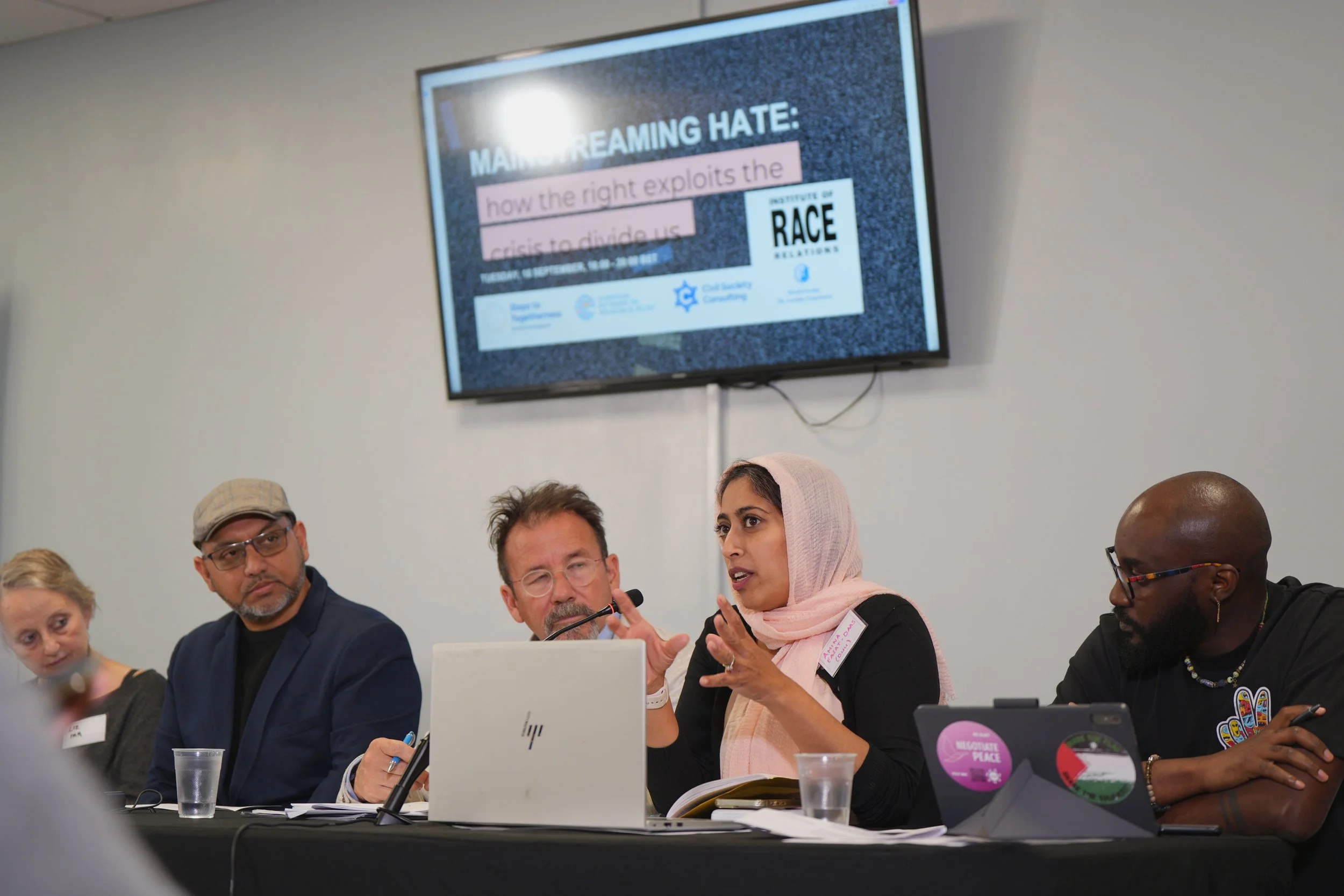
Late last year , Civil Society Together (CST) invited Tom Bell from the Henry Smith Foundation, Kerry Edwards from the Burnside Centre and Lucie Brooke from Free2B, for an online discussion on Systems Change in Practice. This open, thought-provoking session was facilitated by Natasha, the Co-founder of CST and brought together over 70 people from a range from grassroots , civil society, infrastructure, local statutory and funding organisations to demystify systems change and build a shared understanding what systems change means and what it looks like in practice at grassroots level.
You can listen to the event like a podcast here - https://drive.google.com/file/d/1DJmo_PSapBMyFPxcaU1Bh7UIUn2wZKHt/view?usp=drive_link
There was huge interest in the event, so we have captured the key takeaways from the discussion in a blog series: ’Systems change in practice’. This first blog helps to demystify what systems change is, outlines what funders are looking for and helps you understand how you might be doing more systems change than you think. Lastly, we take a beat to acknowledge the big elephant in the room: the economic system that governs our lives. In Part II, you can read about the very real challenges that organisations encounter while enacting systems change and, in Part III, we share tips to overcome them.
Funders are not necessarily expecting grassroots organisations to become entirely focused on systems change - or to be able to drive systems change entirely on their own. What they want to see is that organisations are thinking and operating “in a systems change way”.
If you’re a grassroots organisation, you might find you are already doing more systems change than you think.
There is an elephant in the room when it comes to systems change, which is that the political and economic system and its colonial underpinnings seems to be the root of most problems.
Why did we host this event?
There is a big shift among funders towards systems change. The expectation is that organisations aren’t just supporting people with their problems in the here and now, but are contributing towards changing the system that creates those problems.
We believe that systems change is essential in bringing about meaningful change. Despite all the economic growth we have seen in recent years, many social ills have deepened and become all the more widespread. That’s why there is - rightly - a growing ambition across the board to address the root causes of societal issues rather than merely alleviate their symptoms.
At the same time, our work brings us in direct contact with diverse community organisations who are not at all clear on how they can ‘do’ systems change. We put on an event with the primary goal of helping the grassroots organisations that we work with through our Nurturing Grassroots support programme to understand what funders mean when they say systems change, so that they are in a better position to meet that expectation. We also think funders have a duty to find alignment with the practical realities of the grassroots organisations that they should be supporting. We hoped this event would contribute to creating further alignment between high-level thinking and the realities of working on the front line.
In parallel with Nurturing Grassroots, we’ve also had the opportunity to become systems change experts. We’ve had the privilege of carrying out a systems change evaluation of the TNL x Consortium’s LGBT+ Fund. This experience put us in good stead to hold the space for some clarifying discussions. We invited The Burnside Centre, Free2B and the Henry Smith Foundation, grassroots organisations we met through Nurturing Grassroots and/or the evaluation.
So, first up what the heck is systems change?
Many of the problems that charities, public services and community-led initiatives are ‘fire fighting’ have shared root causes. They’re the symptoms of problems.
“Systems change is about addressing these root causes by transforming the underlying structures, relationships, behaviours, attitudes and norms that shape how society operates” explained Natasha at the start of our event. Different “systems” come together to govern our lives: services, processes, policies, culture, norms, relationships, resources, and, crucially, people, whose attitudes, beliefs and values determine their behaviour and decisions. To eliminate many of today’s problems, these systems need to change.
A great example to illustrate why a systems change approach is so important is the loneliness epidemic. Many efforts to reduce loneliness focus on alleviating symptoms, such as prescribing medication, befriending services, or wellbeing sessions. A systems change approach looks at the root causes and the ‘system’ that generates the widespread disconnection, including work culture, the rise of digital platforms, cuts to public services, urban design, wider policy and so on.
When we acknowledge that many of the social problems and issues we face share root causes that are deeply systemic, it becomes easier to build solidarity among change-makers working on seemingly unrelated issues. Therefore, systems change approaches are often about building solidarity as well as new ways of working. This is what our Steps to Togetherness movement has been all about. To cut a very long (but very interesting) story short: we believe that by tackling loneliness and rebuilding communities, we can create the conditions for solidarity, which creates the conditions for systems change.
Demystifying systems change further - what did our panel have to say?
We are on board with systems change. It’s clearly so important. But it ain’t half complicated. It can be difficult to verbalise, define and describe without sounding jargony. “What the heck is Systems Change?” (the title for this blog) is a direct quote from one of our meetings with one of the grassroots organisations we support. Our panellists - Lucie Brooke from Free2B, Kerry Edwards from The Burnside Centre based in Rochdale, and Tom Bell from Henry Smith Foundation - each added some colour to these definitions by sharing what systems change means to them.
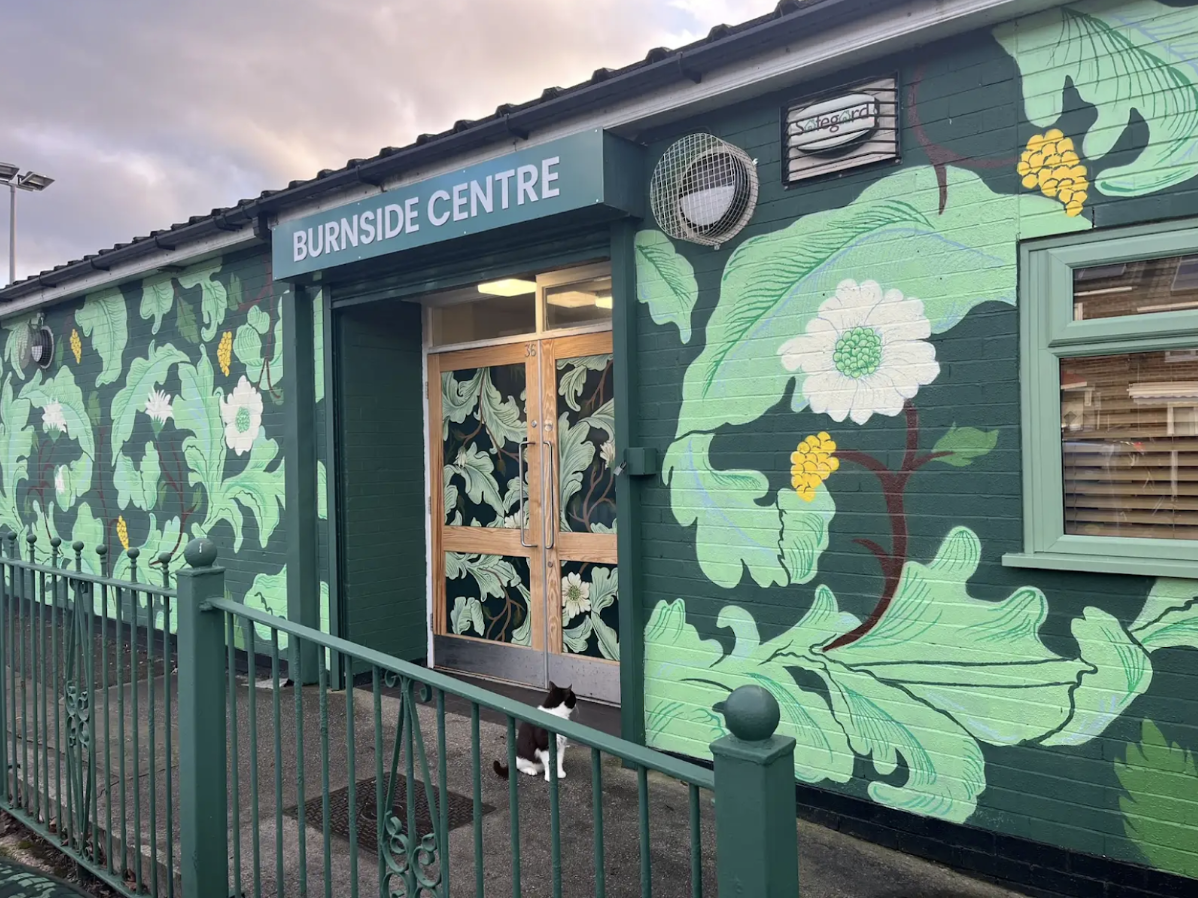
For Kerry, systems change hinges upon two main elements: knowledge and insights.As manager at The Burnside Centre, Kerry is part of a team leading a Consortium of 14 community centres across Rochdale “What we want to do is utilise our grassroots knowledge [and all the insight we have from people we work with] to inform strategic thinking in the borough. As we see it, system change is about harnessing both knowledge and insight to mould them into new perspectives, innovation and ultimately effective action that leads to change”. Burnside hopes to create an alignment between several organisations working towards a similar goal through the Rochdale Community Centre Consortium. Crucially, this consortium has allowed them to be in spaces which would traditionally be occupied by think tanks, commissioned infrastructure organisations, and external consultants.
“Our motto is an alliance of the willing, I think that’s what systems change takes.”
Kerry talks about: meaningful change, preventative approaches, innovation, being people-focused, and action-oriented.
Tom explained that systems change is about focusing less on “what’s gone wrong” in someone’s life, and instead more on “what’s putting people in that situation in the first place?”
He highlights that systems are, ultimately, made up of people. We totally agree. Therefore, “systems change is about looking at the things that shape how people behave.
“At Henry Smith foundation, we see our role really as helping organisations elevate their impact, supporting people directly and helping to fix the conditions that keep causing the same problems to repeat. It's listening, it's connecting, it's influencing, challenging the systems”
Three key takeaways that the event uncovered
1. Funders are not necessarily expecting grassroots organisations to become entirely focused on systems change - or to be able to drive systems change entirely on their own. What they want to see is that organisations are thinking and operating “in a systems change way”.
Speaking as a funder, Tom talked us through Henry Smith Foundation’s recent change journey - why has systems change become so central to their strategy moving forward?
You won’t be surprised to read that the number of high quality applications doing important and increasingly urgent work has been going up and up and up… and up. The mounting pressure forces us all to acknowledge the need for systems change: “these services can only go so far if the systems around them keep reproducing these same problems again and again”, explained Tom. Like most funders Henry Smith is under pressure to cope with the sheer volume of applications, as well as being eager to improve grant-seekers' experiences. This includes minimising the negative impact that unsuccessful funding applications have on applicants. Henry Smith want to create a ‘sharper’ strategic framework that enables decision-makers to meaningfully and justly funnel, filter and process grant applications. Following their strategic review, Henry Smith now has a 2025-2030 strategy that is clear and prioritises those that are able to address the root causes of problems by bringing about systems change.
To be clear, Tom says, they are not completely shifting their funding focus to systems change overnight. Rather, the vision is to fund organisations that provide important frontline and direct services, which are also driving systems change or working in a way that contributes to or embodies systems change.
In recognition that organisations need certain conditions in order to be able to work in a systems change way, Henry Smith’s new approach is relational as well;. “We've changed how we fund so that we really focus on offering longer term flexible grants,that's so grant funded organisations can adapt if the context that they're working in shifts. We focus on relationships and learning rather than more compliance based approaches. One of our new values is to be relationship centred and we hope to see that show up in our grant making as a much more relational grant maker.”
So what are Henry Smith looking for in organisations? Tom notes five systems change practices they’re looking to see on the ground:

An awareness of the systems that are creating the problems the organisations are seeking to solve. Understanding root causes, knowing why issues persist, and looking beyond immediate solutions. For example, recognising how policy discrimination or structural barriers are affecting the people that they serve
Evidence that the organisation understands the wider context that they are operating in and engaging with it.
Collaboration, especially with others that are addressing the same shared root causes - and a mindset of all being partners in a shared system and not competitors. For example, grassroots organisations may work with key colleagues at their local council, schools, NHS teams, community groups and other larger charities.
Encouraging lived experience in leadership. It is not a panacea, but having that conversation can foster deeper connection within communities
Organisations that combine practical support with systemic ambition. Not just helping people survive a broken system, but helping to fix it, and advocating for change.
For example,“We launched our SHOUT Fund this year for youth advocacy and one of the things we did with is we deliberately removed a requirement for a formal diagnosis of learning disability or neurodivergence for people accessing services. And this was really reflecting how we know how unequal that diagnostic system can be, particularly for young people from ethnically minoritized communities. So it's a small thing that we can overtly say that hopefully removes a barrier and starts to indicate to systems the kind of the sailings that are happening there. We're using that convening power. At the end of this month, I'm hosting a roundtable on LGBT plus youth, homelessness and family estrangement, and that's bringing together funders and practitioners to map systems and find the gaps between housing, family and identity.”
2. If you’re a grassroots organisation, you might find you are already doing more systems change than you think
Systems change can sound complicated, abstract and, quite frankly, out of reach. But, once you get your head around it, it’s simpler, more tangible, and more achievable than you might think. Our hope from this event was to help grassroots leaders to get to grips with what systems change is, and what it looks like on the ground. Our hunch was that, in doing so, many of our participants would begin to see that they are doing more systems change than they perhaps think. Our hunch was correct!
During the event, Lucie, the Co-Founder of Free2B reflected on how, in contributing to our systems change evaluation of the LGBT+ Fund, she realised that they had been doing systems change all along.
Free2B is a community organisation in London supporting LGBTQ+ young people. As well as providing a range of youth services in London, Free2B wanted to nudge mainstream youth provision to become more inclusive, and support them in doing so. The Free2B Award is an Inclusivity Award that celebrates youth spaces and highlights good practice when it comes to inclusivity. Nicknamed “Quofsted”, Free2B’s youth council awards good practice with a recognisable badge and support those who are not currently inclusive to make the necessary changes to become badge worthy. As a result of visits from the Free2B Youth Council localclubs, parks, and schools have made positive changes.
Another example of Free2B’s systems change work can be found in the training they provide to schools, social workers, CAM workers, and local authority staff. Free2B’s leveraging their knowledge of good practice and the insights gained from service delivery to deliver training that addresses the problems their young people regularly reported experiencing.
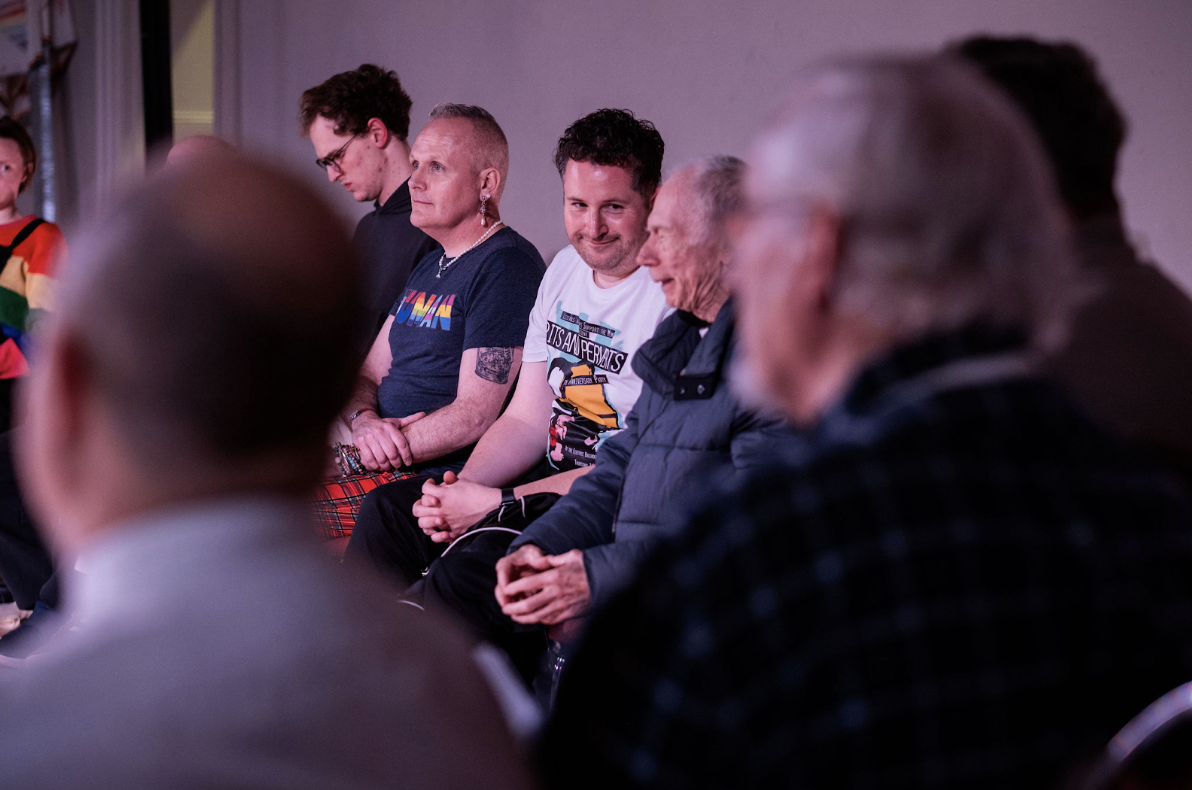
Photo by Jenny Harper Photography, from Stories From The Heart, by Potboiler Theatre, part of GAY STOKE, 2024.
3. There is an elephant in the room when it comes to systems change, which is that the political and economic system seems to be the root of most problems
Our panel was led into an open-floor discussion, which was fluid, honest and open. Our attention was drawn to an inconvenient truth.
We live in a hypercapitalistic and individualistic society - our cultural ideology has been shaped by a colonial mindset. Systems change asks us to take a deep look into the root causes of problems. When we do, it’s plain to see that the economic and political system that governs how society operates is ultimately responsible for most social ills; the economic system also poses barriers to changing the systems we need to change, because what’s best for business is almost always at odds with what’s best for communities.
This resonated with us. At Civil Society Together, we’ve been on a journey to realise that our economic system leads to a narrative of individualism and widespread loneliness, which leads to social fragmentation. When we’re all fragmented, it allows for power to be concentrated at the top of political and financial institutions. When power is concentrated at the top of systems, those systems are easily corrupted and resistant to change.
As our online conversation moved into an open floor discussion, this ‘elephant in the room’ became impossible to ignore. For example, when we ask ourselves what the root causes of food poverty are, it’s not long before we are forced to acknowledge the economic system that allows economic inequality to deepen and widen.
The good news is that talking about systems change forces a wider pool of people to acknowledge the radical change that is needed. The systems change approach is a ‘Trojan Horse’ for a more honest conversation about how the overarching economic and political system shapes local authorities, the NHS, the private sector, and our behaviour, attitudes and beliefs as citizens. The bad news is that, in a world of tech oligarchs and billionaires, talking about systems change can seem “a bit futile” to many of the people we work with.
One thing is for sure: progress cannot be taken for granted in the current climate of polarisation, hostility, the rise of far right extremism and the increasing politicisation of the rights of people of colour, LGBT+ people, migrants, and women. In our systems change evaluation of the LGBT+ Fund, we found that much of Consortium’s value lies not only in advancing change, but in preventing regression. This includes pushing back against harmful policies, rhetoric, beliefs and actions that threaten the safety and dignity of LGBT+ communities. This preventative work might be less visible, so more difficult to evidence in a systems change evaluation, yet still Consortium’s protective actions and broader role is critical. Our evaluation concluded that preventing regression is ‘invisible systems change’ - but no less vital.
Keep reading for the practical challenges and five valuable tips
In this blog, we have introduced the concept of systems change in practice, as informed by our seminar and the experiences of our speakers and attendees. In Blog II, we build upon this discussion to speak about the very real challenges that organisations face while navigating systems change, and some considerations for funders as they support systems change initiatives.
