
SYSTEMS CHANGE IN PRACTICE III: Five tips for grassroots organisations
Authors: Ida Dangi and Natasha Ereira-Guyer. In conversation with our panellists (Tom Bell, Kerry Edwards, and Lucie Brooke) and those that joined our online discussion.

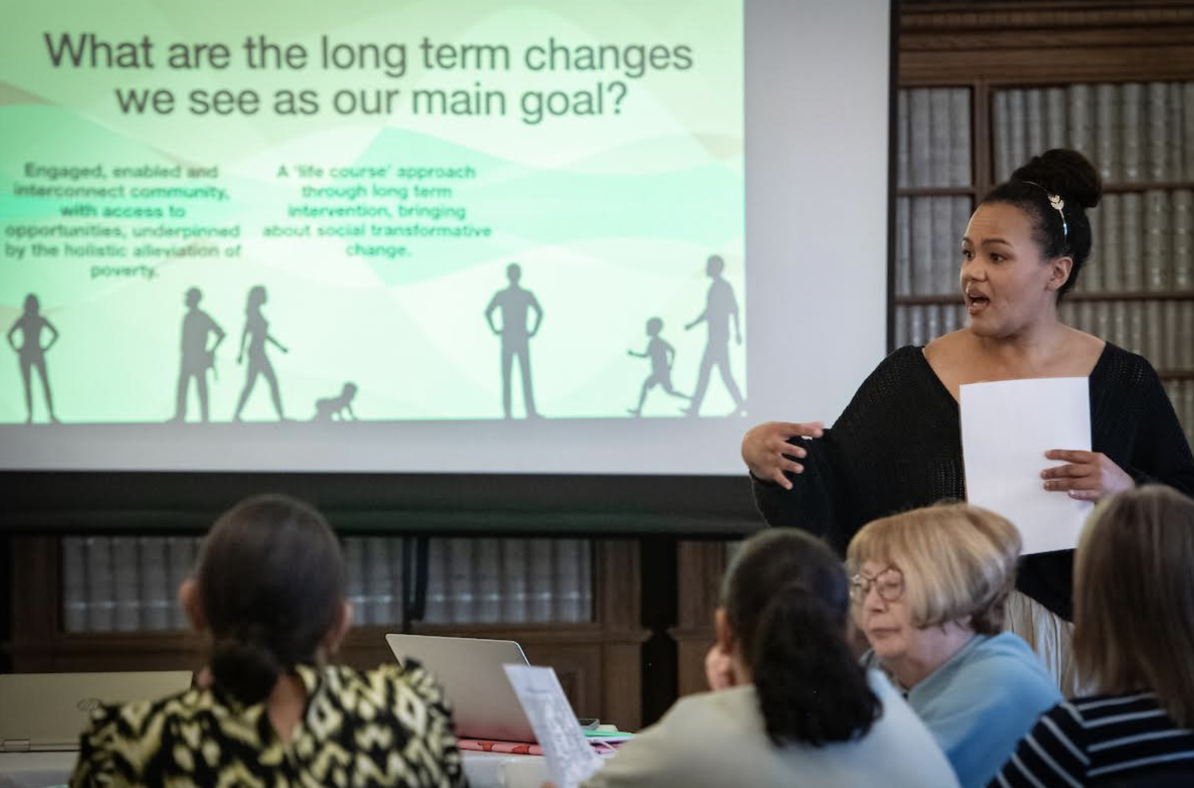
Photo by Jenny Harper Photography, from Stories From The Heart, by Potboiler Theatre, part of GAY STOKE, 2024.
This is the third blog in our three-part Systems Change in Practice series and, at last, it’s time to be a bit more positive! Part I explored the concept and Part II sets out the challenges that grassroots organisations face to drive systems change and some insights for funders as they support organisations in their journey. This Blog shares five tips as you venture into systems change work. They are:
Understand what funders mean when they say systems change
Consider the work you already do: you might already be doing more systems change than you think, or you might have work that you can build on
Have conversations on home turf if needed You might find you can charge the system for some of your systems change work, and create another income stream in one fell swoop.
A little systems change is better than none at all, so adapt and prioritise to reach the system
Model the camaraderie you want to see in others so that you can build intersectional solidarity with a wide range of organisations.
1. Take a moment to understand what funders mean when they say systems change
Systems change can sound complicated, abstract and out of reach, but funders may have more realistic expectations of practical realities than you think. “It sounds like a lot, but organisations do not have to do this alone”, says Tom, from the Henry Smith Foundation. A single organisation is not expected to change the entire system on its own, rather, funders are typically looking for an engagement with the wider system and the recognition of the systemic root causes of societal issues. In our systems change event, Tom gave some clarity on what funders like Henry Smith are looking for. We loved them so much, we’ve nicknamed them “Tom’s Top Tips”. These can give you a sense of what funders mean when they say systems change.

An awareness of the systems that are creating the problems the organisations are seeking to solve. Understanding root causes, knowing why issues persist, and looking beyond immediate solutions. For example, recognising how policy discrimination or structural barriers are affecting the people that they serve.
Evidence that the organisation understands the wider context that they are operating in and engaging with it.
Collaboration, especially with others that are addressing the same shared root causes - and a mindset of all being partners in a shared system and not competitors. For example, grassroots organisations may work with key colleagues at their local council, schools, NHS teams, community groups and other larger charities.
Encouraging lived experience in leadership. It is not a panacea, but having that conversation can foster deeper connection within communities
Organisations that combine practical support with systemic ambition. Not just helping people survive a broken system, but helping to fix it, and advocating for change.
To reduce the fear factor around systems change,it’s also worth making yourself aware of some of the positive improvements that funders are making an effort to adapt in order to support organisations to drive systems change. For example, Tom mentioned that Henry Smith Foundation knows that to support grantees to carry out systems change, they need to move towards “flexible funding, honest relationships and focus on learning signals rather than more rigid metrics.” . Their new approach is relationship-based rather than compliance-based, and they want to be agents of systems change themselves, by “sharing, learning, and using our resources and relationships to help others lead lasting impact” - Tom
2. Consider the work you already do: you might already be doing more systems change than you think, or you might have work that you can build on
For organisations working with limited capacity, systems change can sound out of reach. But, once you get your head around it, it’s simpler, more tangible, and more achievable than you might think. Once you get to grips with what systems change is, and what it looks like on the ground you’re likely to see that you are already doing more systems change than you perhaps think.
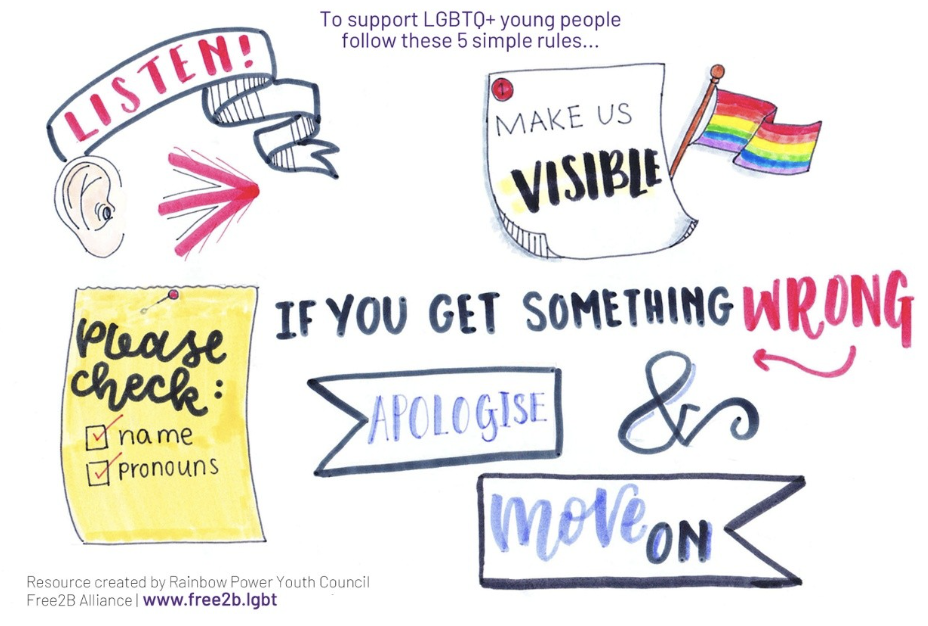
Free2B’s experience (detailed in Blog 1), shows how daily challenges to the system within which organisations operate, is a form of systems change. Free2B is and has always been, focused on direct delivery alongside looking for ways to address the root causes of the issues facing the young people they represent. Their mission since the beginning was to improve LGBTQ+ lives by providing responsive wellbeing support, safe spaces and proactive education, and empowering local communities to address discrimination. For example, while supporting LGBTQ+ young people, Free2B asked themselves that on a systems level, what would an LGBTQ+, inclusive and safe school or service look like? Thus,Free2B along with LGBTQ+ young people, created training sessions that would help inform and create LGBTQ+ inclusive schools. They’ve been delivering these trainings for years, and have been actively engaging with and challenging the wider system in several ways. But Lucie explained that she only recently connected this with the specific ‘language’ of systems change; it wasn’t until she contributed to our systems change evaluation for the LGBT+ Fund that she realised that her organisation has , in fact, been doing systems change all along.
The schools Lucie is working with are limited on funding to pay for the staff training, but, in other cases, you might be able to create supplementary income streams by offering your knowledge and influencing up to the system through training offers. It will depend on what systems you’re trying to influence.
Another tip is to remember and highlight all the work you might be doing to stop systems from regressing. As noted in Blog 1, in the current socio-politico-economic climate, preventing systems from regression is a form of systems change as well.
3. Invite the system to have conversations on home turf if needed and if you can
Sometimes systems change involves participatory exercises with the system. Blog 2 noted that there are often significant structural barriers preventing equitable participation - added to which you might simply not feel comfortable in an intimidating, often corporate-feeling environment. For example, Lucie noted that there are barriers for LGBTQ+ young people to attend certain large consultation events because of either lack of gender neutral toilets, concerns around financing public transport, mobility, time of day, and so on. So while systems change focuses on collaboration and bringing everyone together for a shared purpose, sometimes grassroots organisations could get left out due to significant structural barriers.
To counter this, Lucie decided to offer alternative solutions, for example, asking external organisations to send her the consultation questions,which she can take to LGBT+ young people and then feed it back. Lucie encouraged us to see that that such negotiation is important and worthwhile.
“Alternatively, if you can get the system to come to you, visit your work, see you in action, you can show them a good time, feel comfortable, and likely be in a stronger position to tell them what’s what!” - Natasha Ereira-Guyer, Founder Director of Civil Society Together
4. A little systems change is better than none at all, so adapt and prioritise to reach the system
Limited capacity is the main challenge that affects grassroots organisations’ ability to shift towards systems change. With ever increasing demand and urgency for support, there is a profound lack of capacity for additional work or pushing against a broken system. In addition, pushing against a broken system comes at a cost to the people leading grassroots organisations, and can feel risky, daunting and tiring to them.
We recommend being decisive about what you want to focus on, don’t aim too high and leverage all your strengths in order to minimise the costs to you. For example, Free2B faced many challenges while enacting systems change work, including the limited capacity of schools. In order to overcome this, they focused on simple, low cost and easy to implement changes that authorities and schools could readily implement without the need for extra funding. They asked LGBTQ young people what were the 5 top things that they would like to get across to schools and professionals. They created this amazing postcard to have as a visual (shown below). This has had measurable change, with schools moving towards gender neutral graphics and making effort to use more inclusive language.
5. Model the camaraderie you want to see in others, so that you can build intersectional solidarity with a wide range of organisations
Systems change is all about building solidarity - moving away from treating symptoms in our silos and moving towards working together to address shared root causes. This is not easy to do when you’re a small grassroots organisation, and (as much as we don’t want to admit it) competing for funding with the very people you need to partner with. Our best advice here is to lead by example: “be the camaraderie you want to see in the world”.
Burnside Centre in Rochdale, Manchester is involved in a greater Manchester wide collaboration, bringing together leaders from the voluntary and community sector and the statutory sector to identify elements within the system that they might want to bring change about. “[This] type of work has really helped widen our own networks, sharing cross sector space and exposing staff to working in multidisciplinary teams where we can actually really explore what it might take to shift systems.” - Kerry Edwards, Manager at the Burnside Centre.
Furthermore, Burnside is also collaborating with other community organisations as a Consortium to drive systems change within the Borough of Rochdale. Initially, it was eight grassroots voluntary sector organisations wanting to work more in partnership. “But now, it has developed into a more robust, strategically focused collective”. Kerry highlights that the secret to their success has been that organisations can be themselves and that the Consortium has been comfortable growing organically, without rushing people.
Within the first year of the Consortium, they’ve actively engaged over 14,000 individual people, predominantly from the most marginalised localities and communities in the borough and advocate for their shared interests as a cohesive unit.”. Burnside’s grassroots knowledge helps break down systems change as an abstract concept into something relatable and practical“What we want to do is utilise our grassroots knowledge to inform strategic insight. Through the Consortium, Kerry hopes to create an alignment between several organisations working towards a similar goal.
“Our motto is an alliance of the willing, I think that’s what systems change takes.” - Kerry
Thank you for reading our Blogs on Systems Change in practice. We hope you find this information helpful in your journey with systems change work. If you have any further questions or insights, feel free to reach out through the Contact Us page. We look forward to hearing from you.
